For high-performance composites where void content is critical, removing air and volatiles from the mould cavity during pressing directly determines the final mechanical properties. The vacuum composite press evacuates the pressing zone down to 0.5 mbar with a dedicated vacuum system, minimising air bubbles and dry spots.
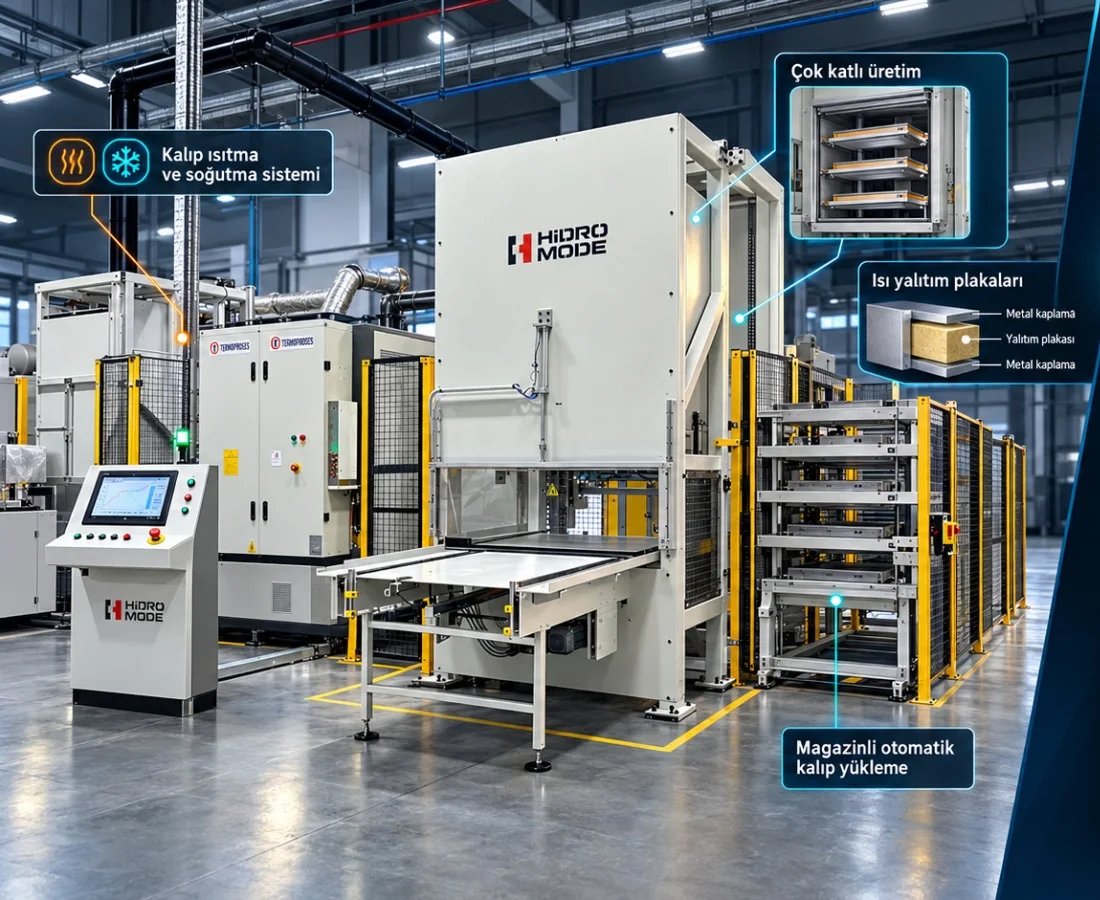
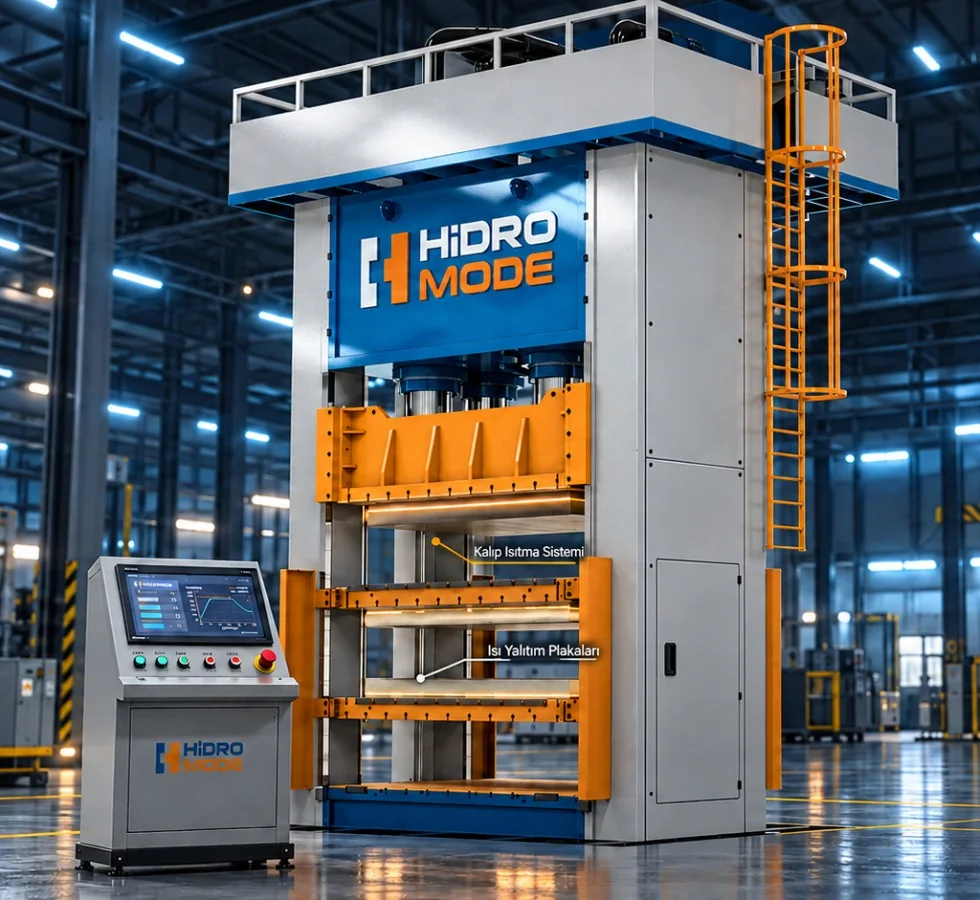
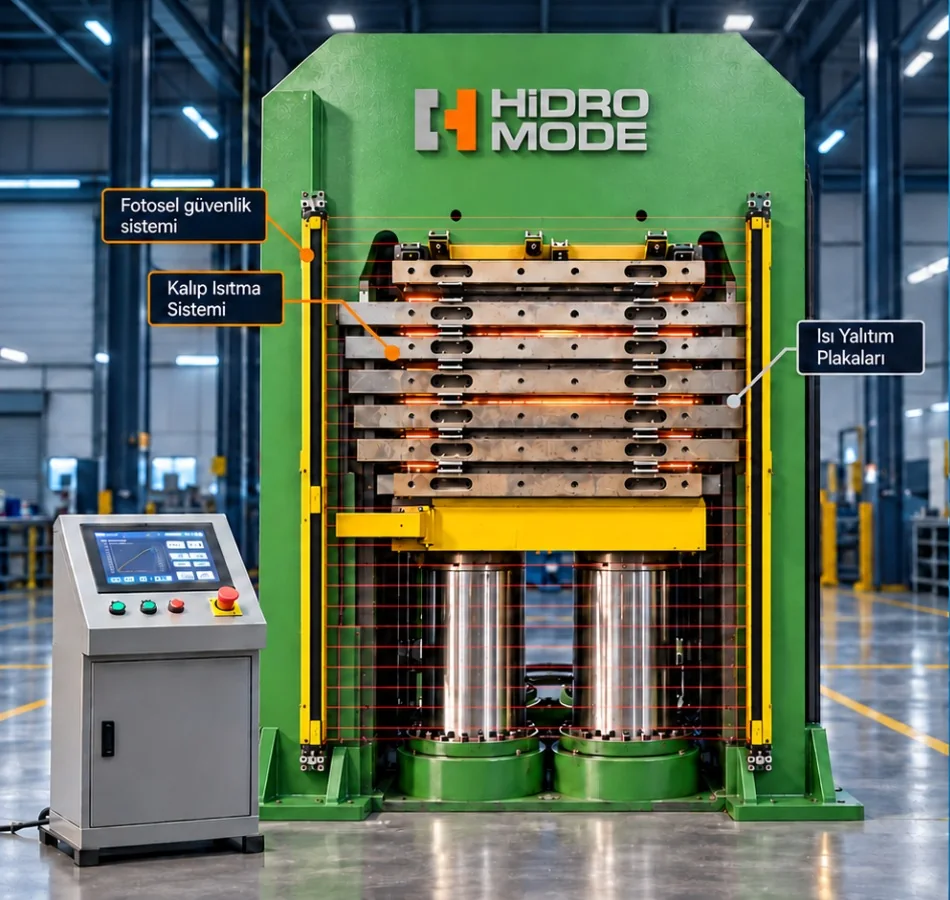
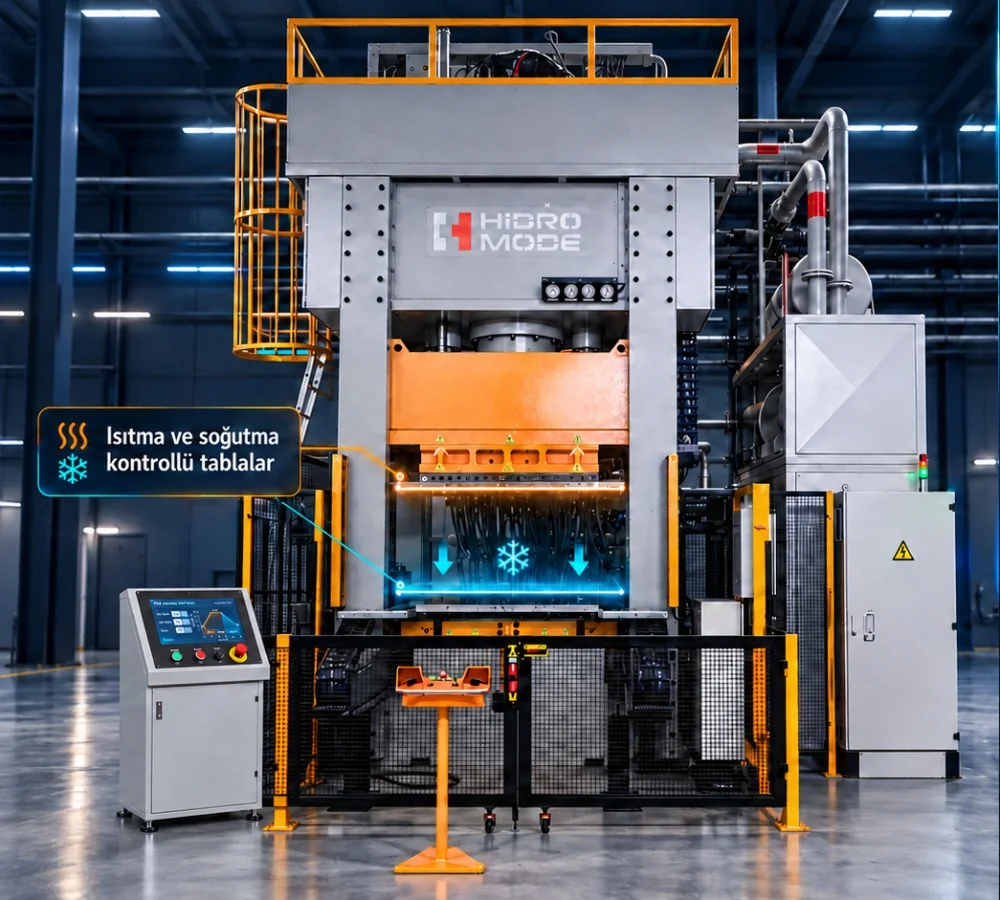
The line is engineered as an integrated system with multi-daylight heated platens, mould heating and cooling, metal-clad insulation plates and a magazine-type automatic mould loading unit. Moulds are picked from the magazine, fed into the press and transferred to the cooling station after cure — reducing operator intervention and shortening cycle time.
The PLC manages heating, dwell and cooling phases according to the temperature–time profile, and process data is logged for every batch to ensure traceability.
Standard engineering in every Hidromode press
- Hydraulics: Bosch Rexroth variable and proportional pumps with high-precision valve groups; independent cooling and filtration circuit.
- Cylinders: Forged-steel barrels and rams; induction-hardened, hard-chrome plated rod surfaces and seals selected to international standards.
- Control: Siemens Simatic S7 PLC, touch-screen HMI with recipe memory; IP55-sealed, air-conditioned electrical cabinet.
- Safety: CE-compliant light curtains, safety PLC, two-hand control, mechanical ram locking, safety fencing and access platforms.