
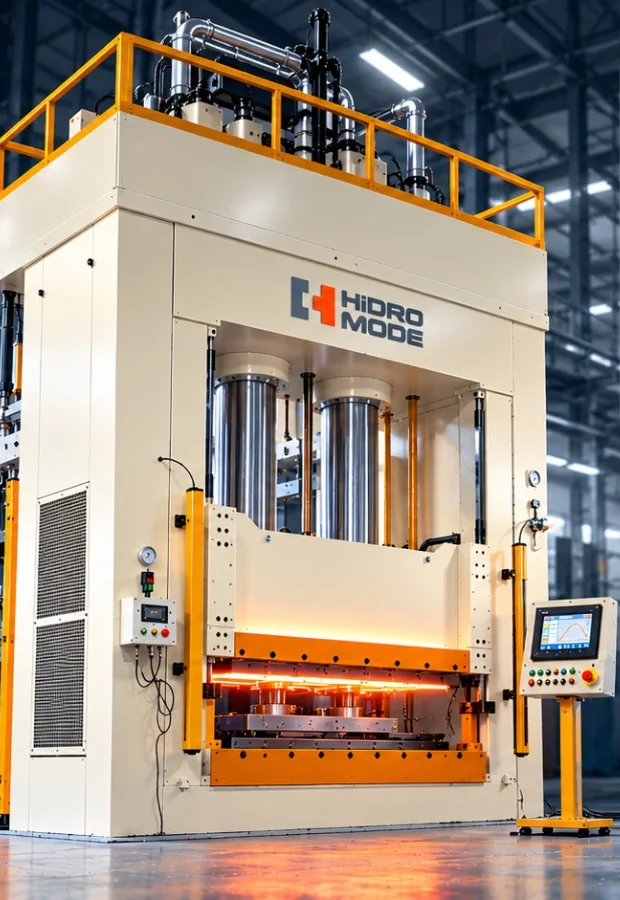
Composite Manufacturing Technologies
Hot hydraulic pressing for SMC, BMC, GMT, LFT, RTM, TMC, CFRP and GFRP
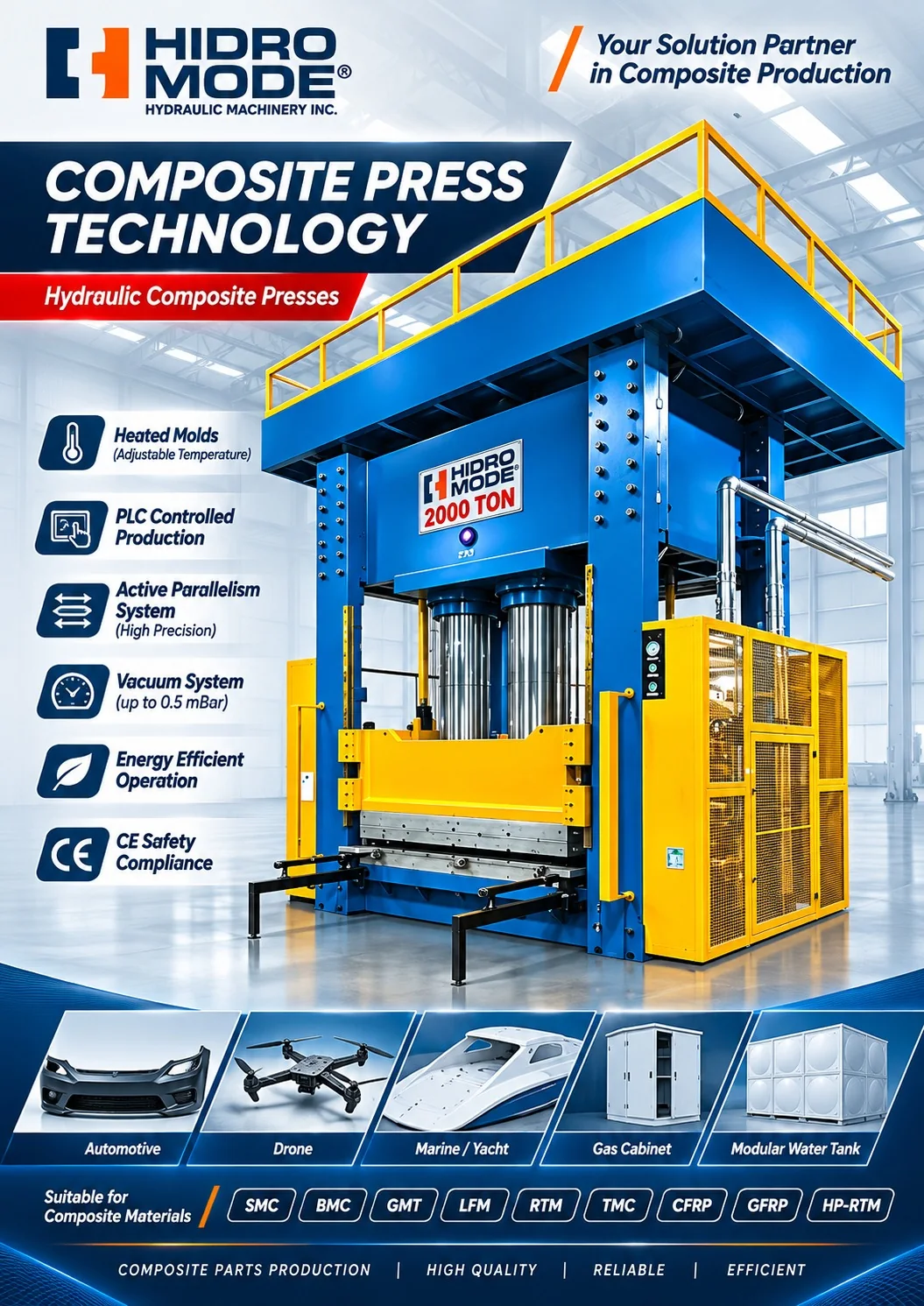
Press solutions matched to material and process
Thanks to low weight, high strength, corrosion resistance and design freedom, composites are replacing metals in industries from automotive and aerospace to energy and infrastructure. The most common way to form them economically and repeatably in series production is hot hydraulic compression moulding.
Each composite system requires a different temperature window, in-mould pressure, closing speed and cure time. Hidromode analyses your material and part to define press force, bolster size, heating method, speed profile and parallelism requirements together with you.
Composite material systems
Main materials formed with hot hydraulic presses
- SMCSheet Moulding CompoundThermoset sheet; large panels
- BMCBulk Moulding CompoundDough form; complex, thick parts
- GMTGlass Mat ThermoplasticGlass-reinforced thermoplastic sheet
- LFTLong Fibre ThermoplasticLong-fibre thermoplastic, impact strength
- RTMResin Transfer MouldingResin injection into dry fibre
- TMCThick Moulding CompoundThick-section structural parts
- CFRPCarbon fibre reinforced plasticHigh strength, low weight
- GFRPGlass fibre reinforced plasticEconomical, corrosion-resistant
- HP-RTMHigh-pressure RTMShort-cycle structural automotive parts
Four keys to successful composite moulding
Controlled heating
Uniform platen and mould temperature with zone PLC control and insulation plates.
PLC control
Temperature, pressure, time and speed profiles stored and repeated as recipes.
Precise pressing
Uniform wall thickness everywhere with an active parallelism system.
Energy efficiency
Low consumption with variable pumps and smart standby modes.
Composite moulding FAQ
What is the difference between SMC and BMC?
SMC is a thermoset moulding compound in sheet form, BMC in bulk (dough) form. SMC is preferred for large, thin-walled panels and BMC for thick, ribbed and complex geometries.
How many tons does a composite press need?
The required force is the projected area of the part multiplied by the in-mould pressure the material needs. For SMC this is typically 50–150 bar; our engineers perform the calculation with your mould data.
Can thermoplastic composites be processed on the same press?
Thermoplastics such as GMT and LFT are usually pressed as pre-heated charges in a cold or warm mould; organosheet and some prepregs require a press with heating–cooling control.
Let’s choose the right press for your material
Share your part drawing and material information and our composite specialists will come back with a process and press recommendation.