Vacuum Composite Moulding: How 0.5 mbar Vacuum Changes Quality
Air and volatiles in the mould cavity create voids and weak spots in composite parts. The principle, benefits and applications of vacuum pressing.
In composite parts, voids are small cavities left unfilled by resin, caused by trapped air or volatiles. As void content rises, interlaminar shear strength and fatigue life fall. In critical applications such as aerospace and defence, void control is therefore central to quality assurance.
How does vacuum pressing work?
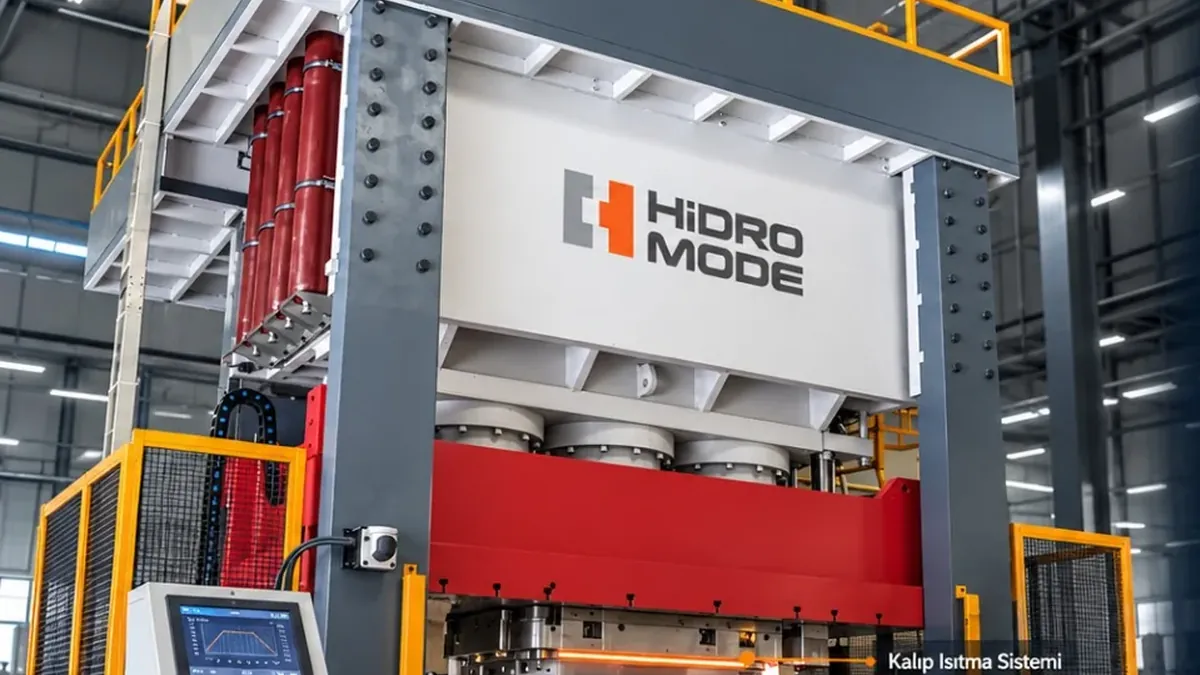
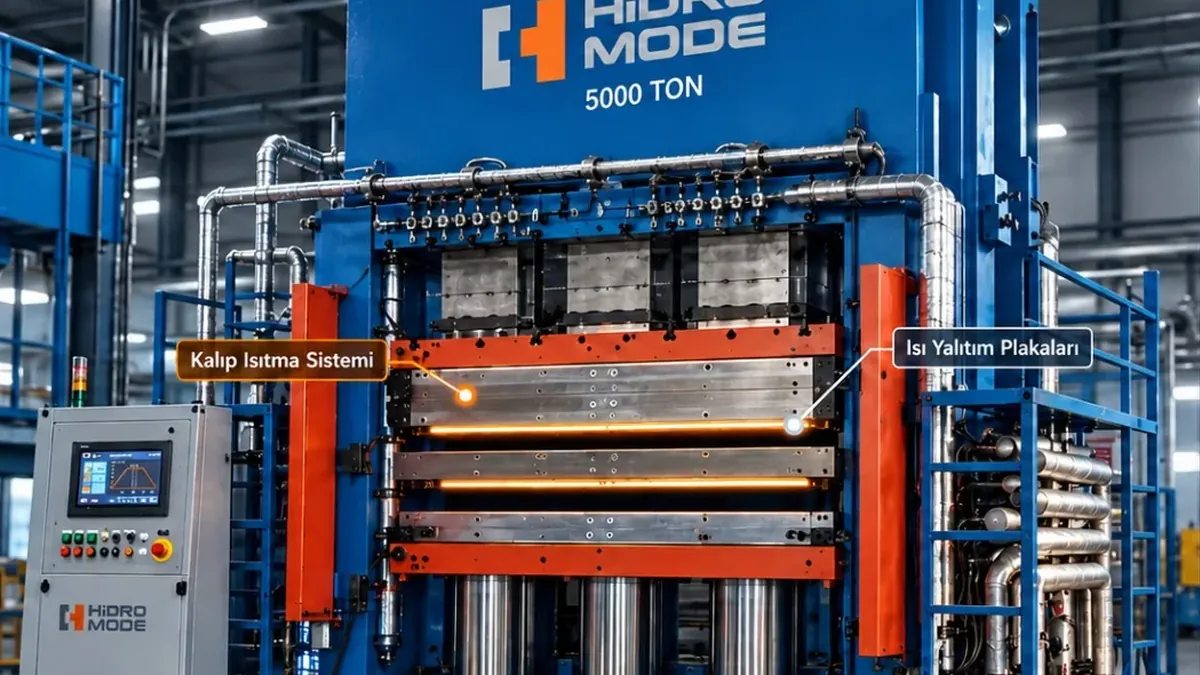
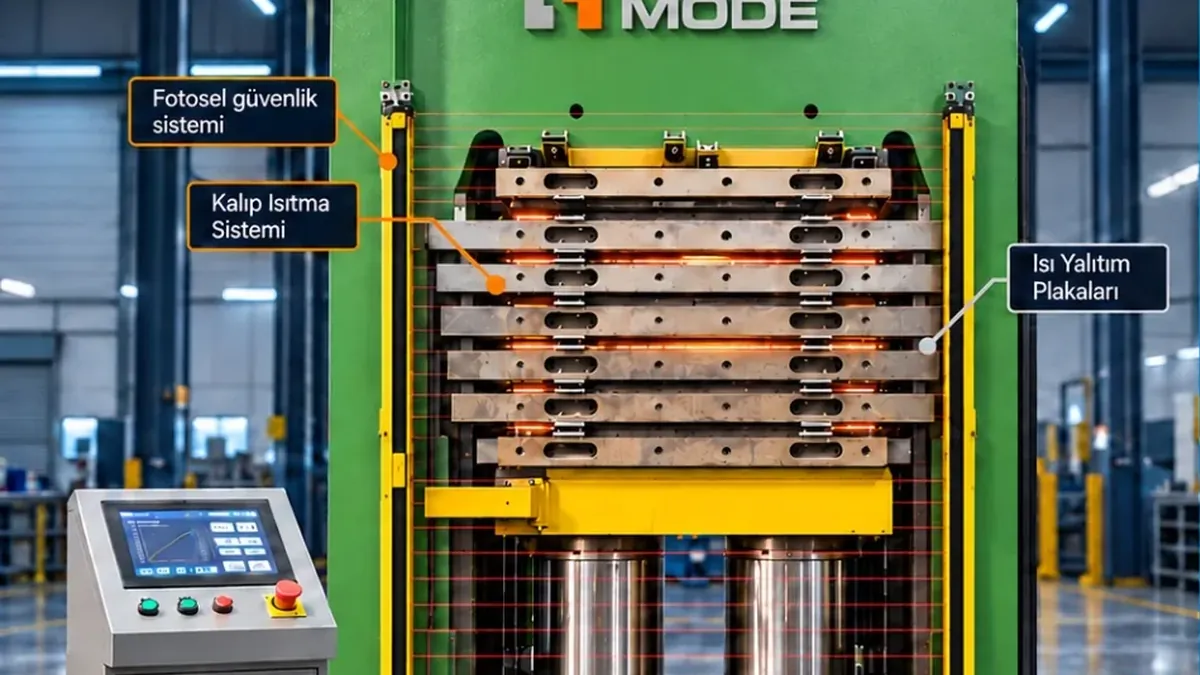
Just before the press closes, the mould perimeter or press zone is sealed and air is evacuated by a vacuum pump. Because the material is compressed in a vacuum, air trapped between plies and volatiles from the resin are removed.
What does 0.5 mbar mean?
Atmospheric pressure is about 1,013 mbar. A vacuum level of 0.5 mbar means most of the air has been evacuated, allowing almost all air between plies to be removed.
Benefits
- Low void content and higher mechanical strength
- Better surface quality with fewer pinholes and dry spots
- More consistent batch quality and fewer rejects
- More reliable consolidation of thick laminates
Combined with automation
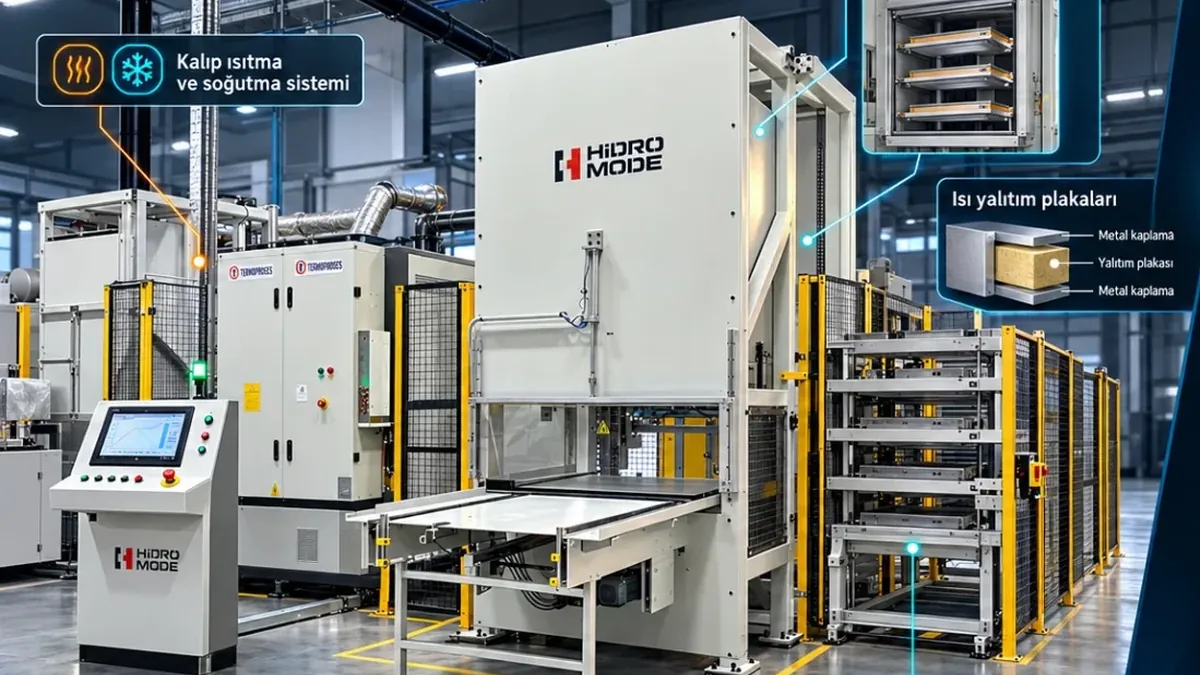
Vacuum presses are often combined with multi-daylight design and magazine-type automatic mould loading. Moulds are fed from the magazine, the heat–dwell–cool profile is run by the PLC and process data is logged for every batch, improving both traceability and operator safety.
Applications
- Aerospace composite parts
- Ballistic panels and defence composites
- CFRP and prepreg parts
- Electrical insulation materials
Frequently Asked Questions
Is vacuum pressing needed for every composite?
No. It is usually unnecessary for standard SMC and BMC; it is recommended for aerospace, defence and prepreg applications where void control is critical.
How is vacuum level controlled?
It is measured by vacuum sensors and pressing does not start until the level defined in the PLC recipe is reached.
Does vacuum pressing lengthen cycle time?
Evacuation adds a few seconds; higher quality and fewer rejects more than compensate.
Our engineers will help you with press selection, capacity and automation.